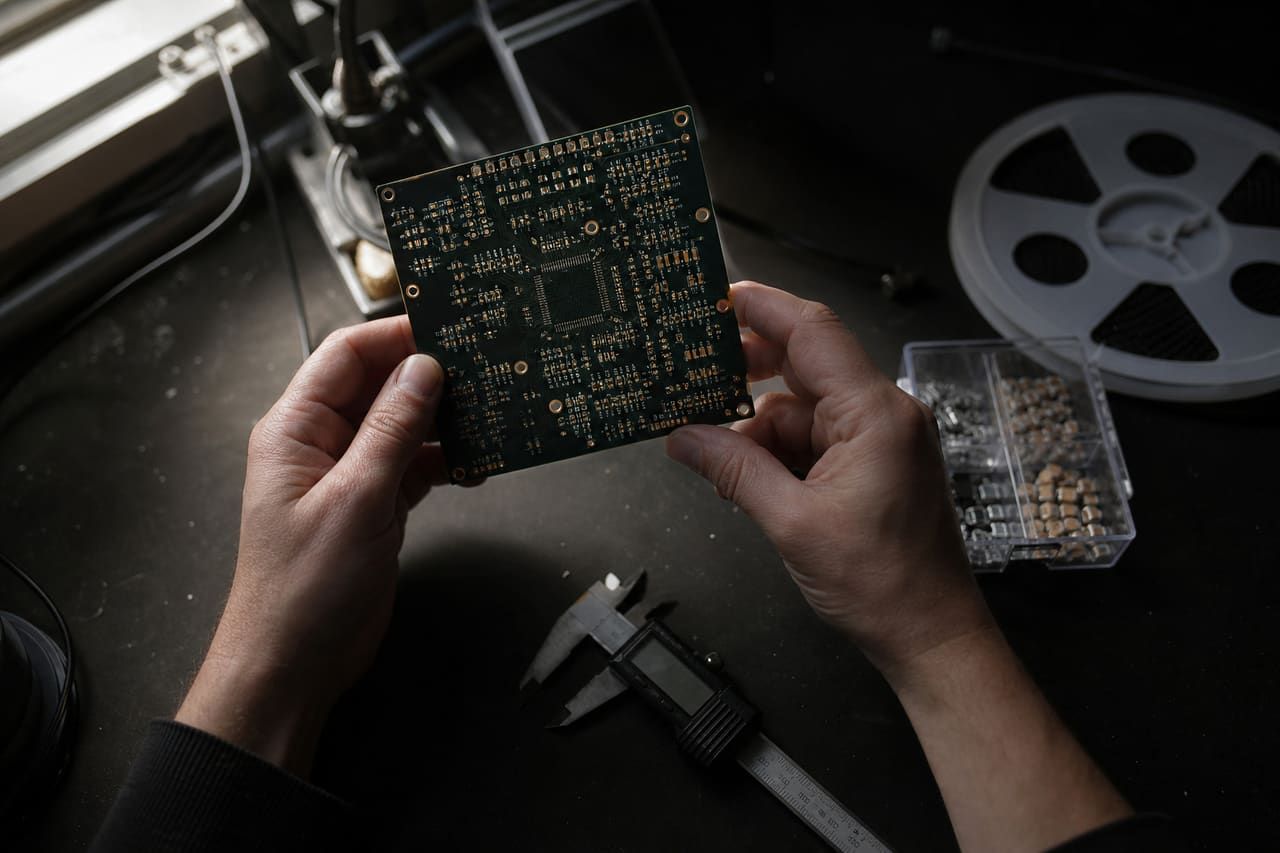
Hardware Design Services
From schematic to a board that is ready to manufacture
Firmware that holds up in the field, not just on the bench
We write the firmware layer that decides whether a product ships or stalls in validation. That means deterministic timing, predictable power behaviour and clean recovery from the failure modes real deployments produce — brownouts, dropped links, corrupted updates and sensors that lie.
We work across STM32, ARM Cortex-M and comparable microcontroller families, with or without an RTOS. Where a project already has firmware, we take it over, document it and stabilise it rather than insisting on a rewrite.
Discuss your project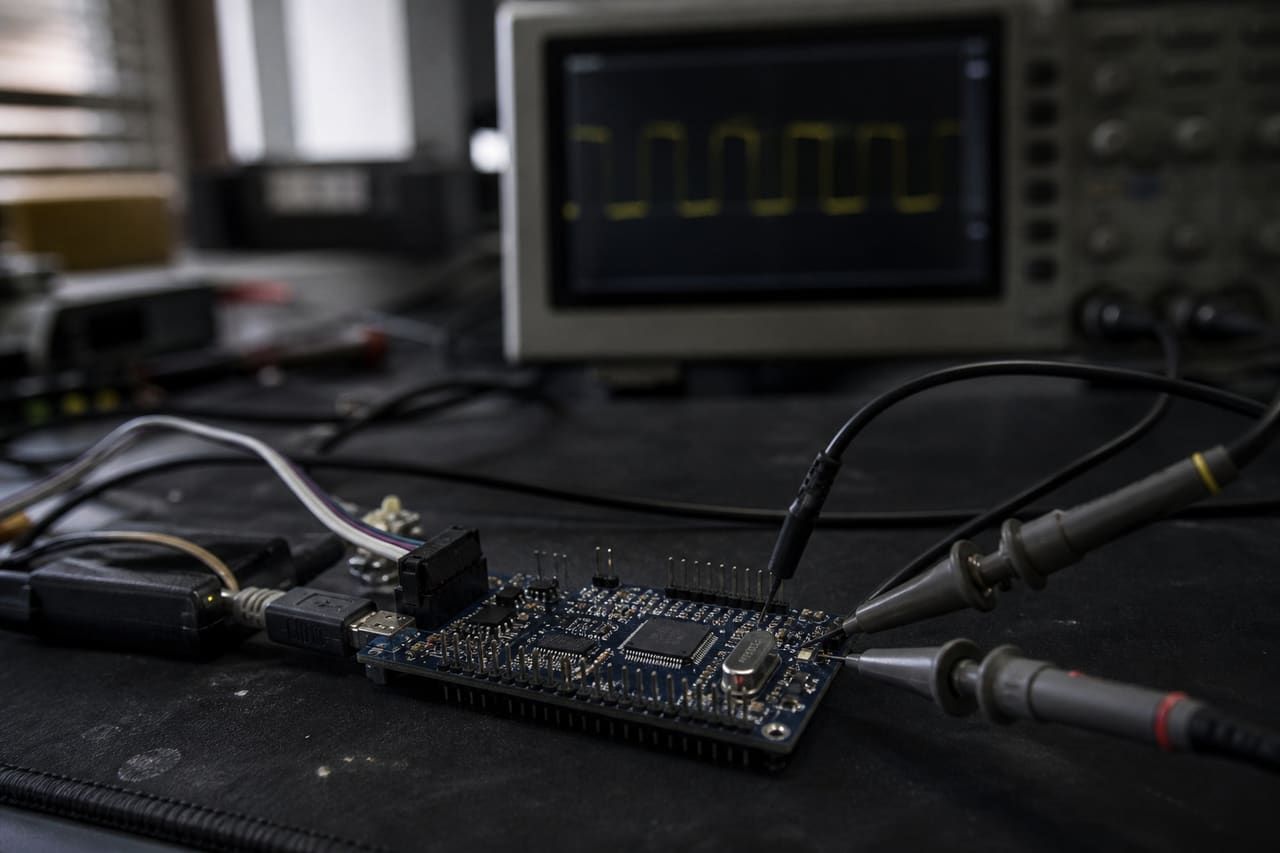
Board bring-up, peripheral drivers and hardware abstraction layers written against the schematic, not a generic template.
Task decomposition, priority and stack sizing, and timing analysis so real-time deadlines are met under worst-case load.
CAN, UART, SPI, I2C, USB and TCP/IP stacks with resilient framing, retry and error-recovery behaviour.
Secure, power-fail-safe update paths with rollback, so a failed update in the field does not become a truck roll.
Duty-cycle and sleep-state design for battery-powered and energy-harvesting devices, measured against a real budget.
Unit tests, hardware-in-the-loop checks and soak testing before firmware is called release-ready.
Before any code, we agree what the product must guarantee: worst-case response times, interrupt latency, and the energy budget per operating mode. These become acceptance criteria rather than aspirations.
Task decomposition, priorities and stack sizing are decided up front and reviewed with you. Getting this wrong is the most expensive mistake in firmware, and the hardest to unpick later.
Peripheral by peripheral, each one proven on real hardware before the next is started. You see working functionality throughout, not a large integration risk at the end.
Timing measurement, power profiling and extended soak testing, followed by a walkthrough with your engineers so the code is genuinely maintainable by your team.
You do. All source code, build scripts and documentation are delivered into your repository and the IP is assigned to you. We do not retain licence-back rights or embed proprietary blobs that would tie you to us.
Yes, and it is a common request. We start with a review of the existing code, document what it actually does, and stabilise it. We only recommend a rewrite when the existing base genuinely cannot carry the roadmap, and we will say so plainly with reasons.
Almost always. We work across the major Cortex-M families and comparable architectures. If your chosen part has a real problem for the requirement — availability, peripheral limits, long-term supply — we will raise it early, but the decision stays yours.
With evidence rather than assertion: measured interrupt latency and task timing under worst-case load, power profiling against the budget, fault-injection for brownout and link loss, and extended soak runs. Results are delivered as part of the handover.
No account managers in the middle. Share your requirement and you will get a technical response, with an honest view of scope and timeline.
Start the conversationFrom schematic to a board that is ready to manufacture
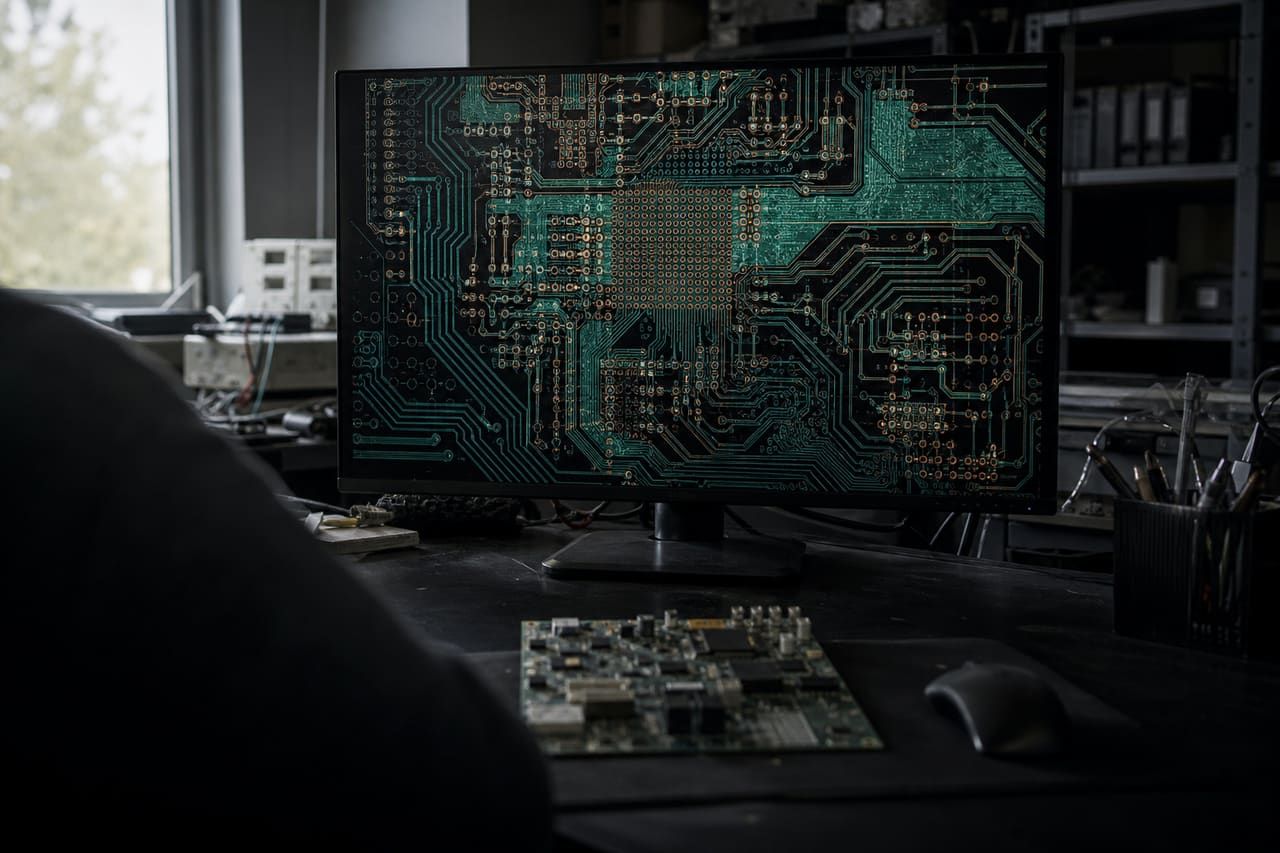
Layouts that pass signal integrity and manufacture cleanly
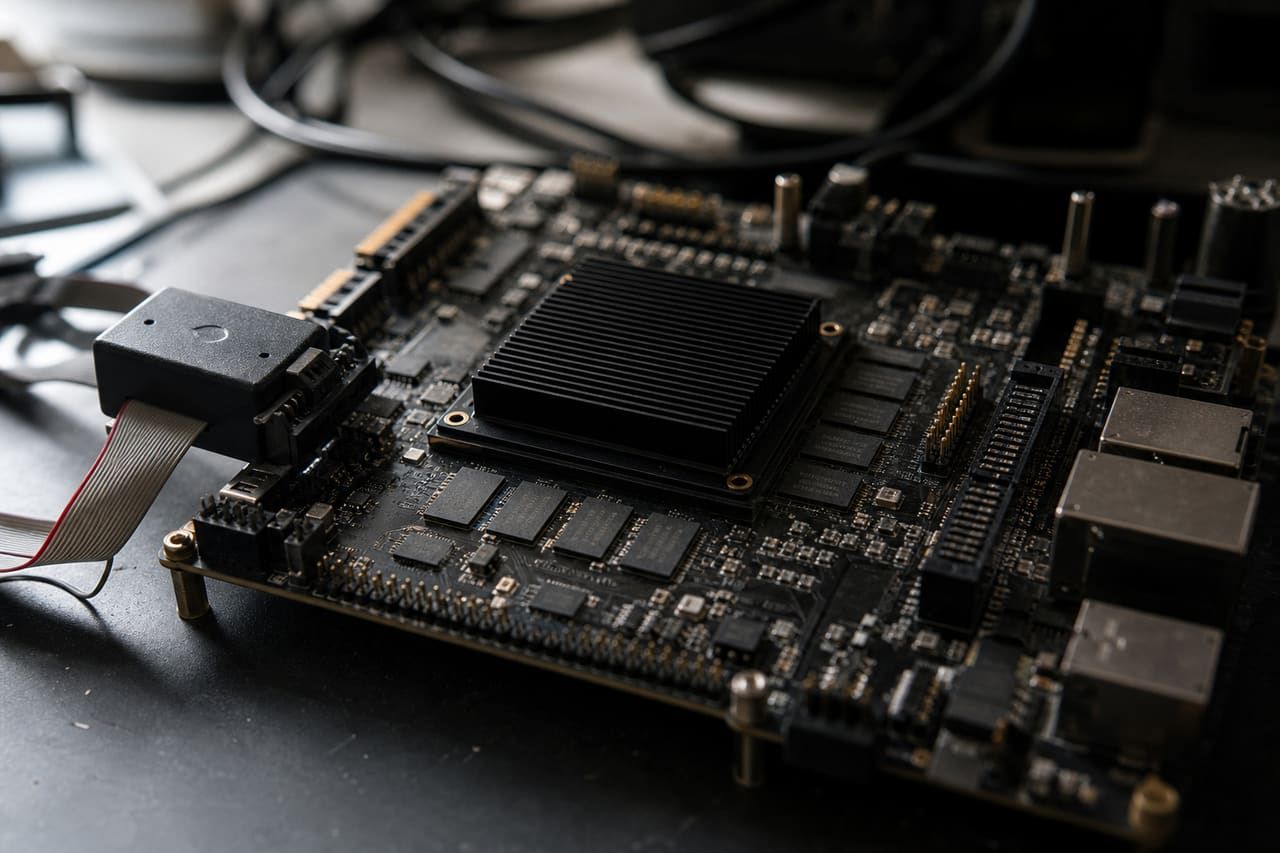
Custom digital logic, verified before it reaches silicon