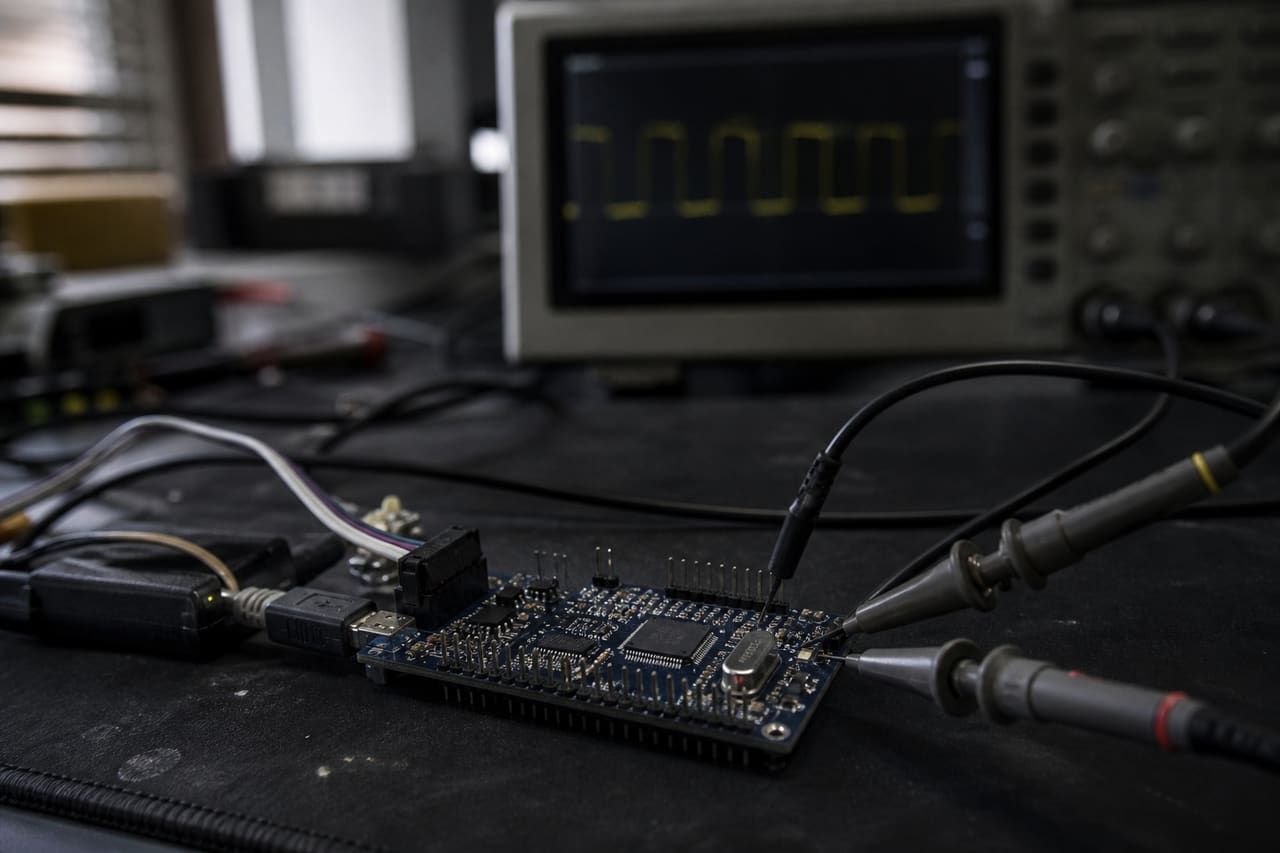
Embedded Firmware Development
Firmware that holds up in the field, not just on the bench
Boards that boot reliably and stay maintainable for years
We build and maintain the Linux layer on custom hardware — the part of the stack that has to survive years of security updates, kernel migrations and hardware revisions without a rewrite.
Work spans ARM Cortex-A, x86 and RISC-V targets, from initial board bring-up through application development and long-term maintenance of the build system.
Our embedded Linux development service covers a new product, a port of an existing board to a newer kernel or Yocto release, or taking over an image that nobody on your team can rebuild with confidence.
Discuss your project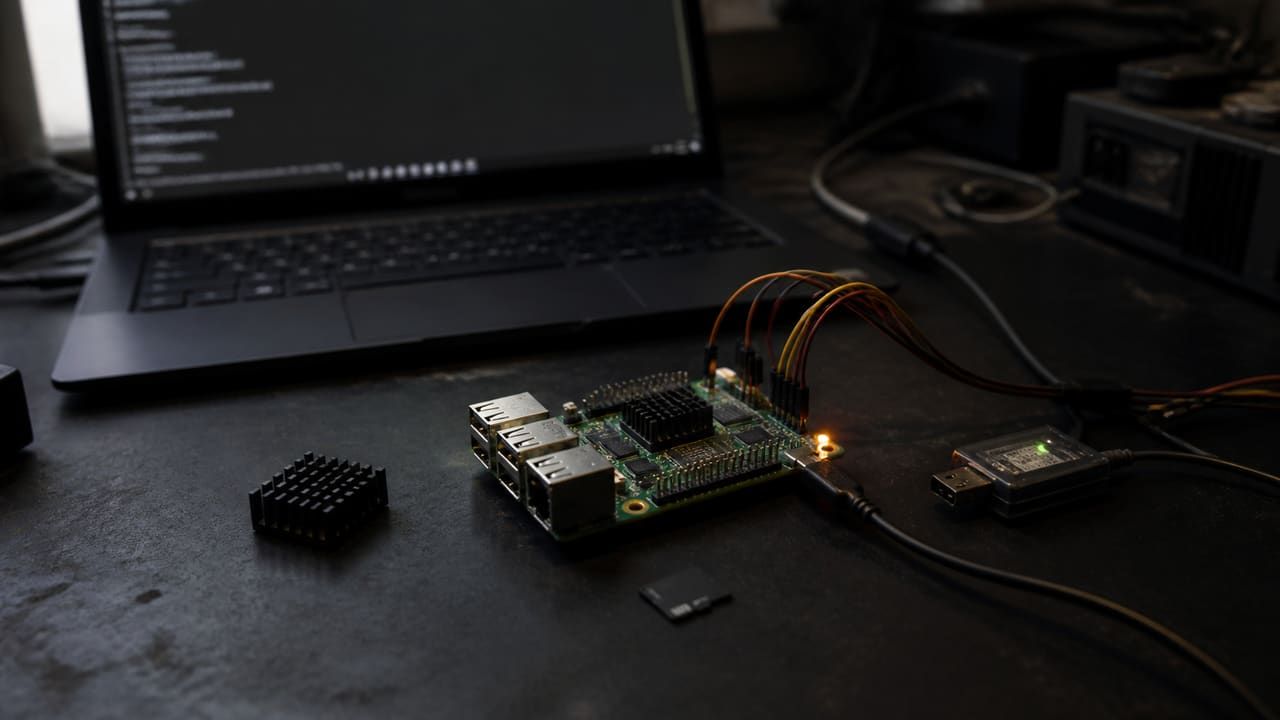
Custom BSPs including bootloader (U-Boot), device tree and kernel configuration.
Drivers for I2C, SPI, UART, Ethernet, USB and custom peripherals, written for upstream conventions.
Lean, reproducible images sized for the target rather than a general-purpose distribution.
PREEMPT_RT integration and latency tuning for time-sensitive control applications.
Native services and applications that use the platform properly — sensibly supervised and logged.
Boot time, power and performance tuning alongside security hardening and secure boot.
We choose a build system and kernel baseline you can live with for years — including how security updates and kernel migrations will be handled, not just how the first image gets built.
Bootloader, device tree and kernel configuration for your hardware, taking the board from power-on to a reliable, repeatable boot.
Device drivers written to upstream conventions for your peripherals, plus the application services that sit on top of them.
Boot time, memory and power tuning, secure boot and update strategy, and a documented process for rebuilding the image months later.
It depends on the product's lifetime and team. Buildroot is simpler and faster to learn, and suits smaller images and shorter lifecycles. Yocto has a steeper curve but scales better across product families and long maintenance horizons. We will recommend based on your situation, not habit.
Often, yes. PREEMPT_RT and careful tuning bring Linux's worst-case latency down far enough for many control applications, and we measure it on your hardware rather than quote a generic figure. If your deadlines are tighter or must be provably bounded, we will tell you that a separate microcontroller or FPGA is the right answer rather than pretend Linux can do it.
Your team, with everything documented so that is realistic — or us on an ongoing basis if you prefer. Either way the build is reproducible from a clean checkout, which is what makes long-term maintenance possible at all.
Usually, and it is a well-bounded piece of work. We measure where the time actually goes across bootloader, kernel and userspace, then address the largest contributors. Substantial reductions are common on systems that have not been tuned before.
Yes. We start by inventorying your out-of-tree patches, drivers and device tree changes, then migrate them in stages so the board keeps booting at each step. The result is a documented, reproducible build on a baseline that still receives security fixes.
ARM Cortex-A, x86 and RISC-V targets. If your SoC is not one we have worked with, we will say so after reviewing its datasheet and the state of its upstream kernel support, before you commit to a plan.
Schematics and the datasheets for the main SoC and peripherals, your functional and boot-time requirements, and access to a working board. If the hardware is still being designed, we can review the design for Linux support before it is fabricated.
No account managers in the middle. Tell us what you are building and you will get a technical reply, with an honest view of scope and timeline. We usually reply within one business day.
Firmware that holds up in the field, not just on the bench
From schematic to a board that is ready to manufacture
Devices, connectivity and dashboards that work as one system